.png)


An Interdisciplinary Path to Clearer Thinking
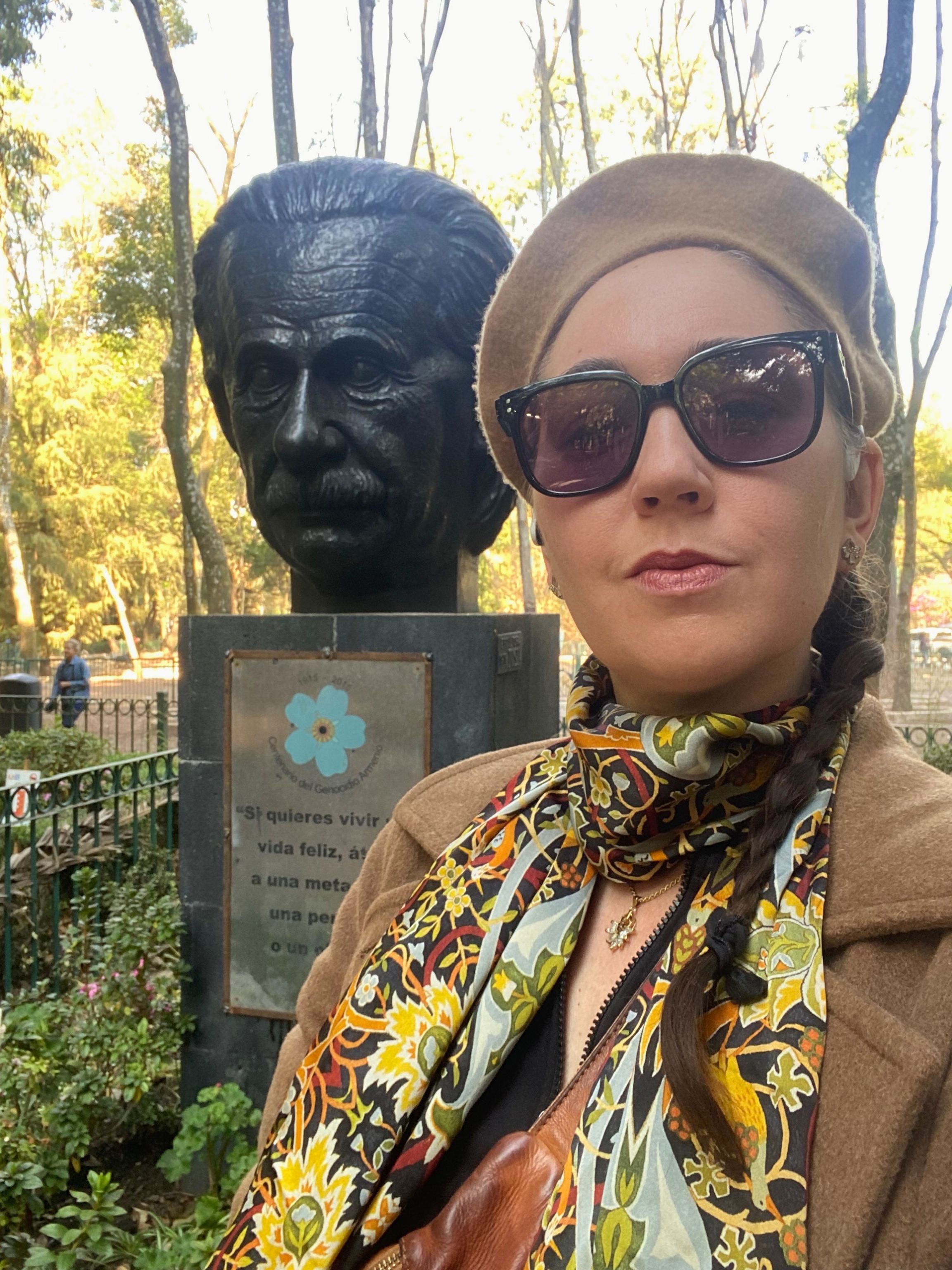
MDA alumni Tatiana Tylosky’s path has been interdisciplinary from the beginning, but very intentionally so. After studying at NYU’s Gallatin School, she gained practical experience working in startups, learning how to build, how to code, and how to make decisions even when something wasn’t clear.
“[Gallatin] was honestly a magical experience. It gave me exposure to a wide range of ideas, ways of thinking, and people. At the same time, like most undergraduate programs, it wasn’t designed to teach you how to operate in real-world uncertainty, which is what I became much more interested in over time.”
That’s what made Minerva’s Master in Decision Analysis (MDA) so compelling. To sharpen her decision-making skills, Tatiana joined Minerva’s MDA program, giving her the ability to step back into academic thinking, but this time with context. She learned how to read and evaluate real academic research again, how to structure arguments properly, and how to apply decision frameworks to real case studies.
“It was one of the first times I felt like academia and real-world execution were actually speaking to each other,” said Tatiana.
Structuring Work with OpenLedger
Throughout her career in consulting, startups, and clinical research, Tylosky noticed a recurring problem of people struggling to define or price work properly. On one side, you have contributors doing endless iterations without clear boundaries, often under vague agreements. On the other, you have clients paying retainers or monthly fees without receiving clearly defined outcomes.
Having been on both sides of that dynamic, this led to Tatiana’s founding of OpenLedger, a platform that structures work around deliverables instead of ambiguity.The idea is simple, but surprisingly rare in practice. OpenLedger helps define what is being delivered, ties payment directly to that, and creates explicit boundaries around what is included and what is not.
“It takes the scope-of-work model used in large organizations and makes it usable for individuals and smaller teams,” Tylosky explained. The system ensures contributors are paid fairly for defined work and clients receive verifiable outputs. When that structure is in place, a lot of unnecessary friction disappears.
How the MDA Sharpened Her Thinking
Tylosky credits the MDA program with teaching her how to create structure under uncertainty. Instead of ignoring ambiguity, she learned to break problems down and design around them.
In traditional education, you’re often rewarded for being correct. In practice, especially as a founder, you’re operating without complete information most of the time.The MDA program teaches participants to break down problems, identify ambiguities and design around ambiguities versus ignoring it.
“I now read academic papers regularly, extract what matters, and apply it directly to what I’m building. That wasn’t something I could do effectively before. So for me, Minerva wasn’t about theory, it was about reconnecting rigorous thinking with real-world application,” explained Tatiana.
When Ambiguity Becomes Friction
When asked for advice, Tatiana emphasized the importance of defining the problem correctly. A skill often underestimated, she believes most operational failures stem from unclear expectations, vague ownership and poorly defined work, rather than a lack of talent.
Her main mindshift suggestion is to stop accepting ambiguity as the default. While many people assume messy work structures are normal, she identifies them as the root cause of inefficiency, conflict and burnout.
“Clear systems don’t limit people, they allow them to actually do their best work,” said Tatiana.
Building What Comes Next
Tylosky currently focuses on two areas. First, she continues to build OpenLedger's infrastructure for deliverable-based work and fair compensation,Second, she works on data sovereignty in Latin America and other markets. Through her work with Farmacon Global and Rare DIEM, she’s seen firsthand how incentives in clinical research can become misaligned and how urgency can create conditions where value is extracted from emerging markets without building long-term, equitable systems.
For Tatiana data sovereignty means people should own their data and countries should control the systems that govern it.
“This isn’t about politics, it's about structure and incentives. If systems are designed in a way that consistently moves value away from the people generating it, that pattern will repeat itself.”
Every other year, Tatiana runs Rare DIEM, an international conference focused on clinical research and data sovereignty, where she brings stakeholders together to discuss better models and practical approaches.
If you’re ready to move beyond vague frameworks and start making sharper, more intentional decisions, Minerva’s MDA offers a rare bridge between academic rigor and real-world execution, exactly what alumni like Tatiana describe.
Learn more here. MDA applications close June 10, 2026.
And to follow what Tatiana is building, check out:
Quick Facts
Computational Sciences
Computational Sciences
Natural Sciences
Computational Sciences
Arts & Humanities, Natural Sciences
Social Sciences & Arts and Humanities
Business
Computational Sciences
Computational Sciences
Social Sciences & Business
Computational Sciences
Social Sciences
Computational Sciences & Business
Business & Computational Sciences
Computational Sciences
Computational Sciences
Social Sciences & Business
Business
Natural Sciences
Social Sciences
Social Sciences
Social Sciences & Business
Business & Computational Sciences
Business and Social Sciences
Social Sciences and Business
Computational Sciences & Social Sciences
Computer Science & Arts and Humanities
Business and Computational Sciences
Business and Social Sciences
Natural Sciences
Arts and Humanities
Business, Social Sciences
Business & Arts and Humanities
Computational Sciences
Natural Sciences, Computer Science
Computational Sciences
Arts & Humanities
Computational Sciences, Social Sciences
Computational Sciences
Computational Sciences
Natural Sciences, Social Sciences
Social Sciences, Natural Sciences
Data Science, Statistics
Computational Sciences
Business
Computational Sciences, Data Science
Social Sciences
Natural Sciences
Business, Natural Sciences
Business, Social Sciences
Computational Sciences
Arts & Humanities, Social Sciences
Social Sciences
Computational Sciences, Natural Sciences
Natural Sciences
Computational Sciences, Social Sciences
Business, Social Sciences
Computational Sciences
Natural Sciences, Social Sciences
Social Sciences
Arts & Humanities, Social Sciences
Arts & Humanities, Social Science
Social Sciences, Business
Arts & Humanities
Computational Sciences, Social Science
Natural Sciences, Computer Science
Computational Science, Statistic Natural Sciences
Business & Social Sciences
Sustainability
Sustainability
Natural Sciences & Sustainability
Natural Sciences
Sustainability
Computational Sciences
Computational Sciences
Computational Science & Business
Data Science and Statistics
Data Science and Statistics, Digital Practices
Earth and Environmental Systems
Cognition, Brain, and Behavior & Philosophy, Ethics, and the Law
Computational Theory and Analysis
Computer Science and Artificial Intelligence
Brand Management & Computer Science and Artificial Intelligence
Computer Science and Artificial Intelligence
Economics and Society & Strategic Finance
Enterprise Management
Economics and Society
Cells and Organisms & Brain, Cognition, and Behavior
Cognitive Science and Economics & Political Science
Applied Problem Solving & Computer Science and Artificial Intelligence
Computer Science and Artificial Intelligence & Cognition, Brain, and Behavior
Designing Societies & New Ventures
Strategic Finance & Data Science and Statistics
Brand Management and Designing Societies
Data Science & Economics
Machine Learning
Cells, Organisms, Data Science, Statistics
Arts & Literature and Historical Forces
Artificial Intelligence & Computer Science
Cells and Organisms, Mind and Emotion
Economics, Physics
Managing Operational Complexity and Strategic Finance
Global Development Studies and Brain, Cognition, and Behavior
Scalable Growth, Designing Societies
Business
Drug Discovery Research, Designing and Implementing Policies
Historical Forces, Cognition, Brain, and Behavior
Artificial Intelligence, Psychology
Designing Solutions, Data Science and Statistics
Data Science and Statistic, Theoretical Foundations of Natural Science
Strategic Finance, Politics, Government, and Society
Conversation
An Interdisciplinary Path to Clearer Thinking
MDA alumni Tatiana Tylosky’s path has been interdisciplinary from the beginning, but very intentionally so. After studying at NYU’s Gallatin School, she gained practical experience working in startups, learning how to build, how to code, and how to make decisions even when something wasn’t clear.
“[Gallatin] was honestly a magical experience. It gave me exposure to a wide range of ideas, ways of thinking, and people. At the same time, like most undergraduate programs, it wasn’t designed to teach you how to operate in real-world uncertainty, which is what I became much more interested in over time.”
That’s what made Minerva’s Master in Decision Analysis (MDA) so compelling. To sharpen her decision-making skills, Tatiana joined Minerva’s MDA program, giving her the ability to step back into academic thinking, but this time with context. She learned how to read and evaluate real academic research again, how to structure arguments properly, and how to apply decision frameworks to real case studies.
“It was one of the first times I felt like academia and real-world execution were actually speaking to each other,” said Tatiana.
Structuring Work with OpenLedger
Throughout her career in consulting, startups, and clinical research, Tylosky noticed a recurring problem of people struggling to define or price work properly. On one side, you have contributors doing endless iterations without clear boundaries, often under vague agreements. On the other, you have clients paying retainers or monthly fees without receiving clearly defined outcomes.
Having been on both sides of that dynamic, this led to Tatiana’s founding of OpenLedger, a platform that structures work around deliverables instead of ambiguity.The idea is simple, but surprisingly rare in practice. OpenLedger helps define what is being delivered, ties payment directly to that, and creates explicit boundaries around what is included and what is not.
“It takes the scope-of-work model used in large organizations and makes it usable for individuals and smaller teams,” Tylosky explained. The system ensures contributors are paid fairly for defined work and clients receive verifiable outputs. When that structure is in place, a lot of unnecessary friction disappears.
How the MDA Sharpened Her Thinking
Tylosky credits the MDA program with teaching her how to create structure under uncertainty. Instead of ignoring ambiguity, she learned to break problems down and design around them.
In traditional education, you’re often rewarded for being correct. In practice, especially as a founder, you’re operating without complete information most of the time.The MDA program teaches participants to break down problems, identify ambiguities and design around ambiguities versus ignoring it.
“I now read academic papers regularly, extract what matters, and apply it directly to what I’m building. That wasn’t something I could do effectively before. So for me, Minerva wasn’t about theory, it was about reconnecting rigorous thinking with real-world application,” explained Tatiana.
When Ambiguity Becomes Friction
When asked for advice, Tatiana emphasized the importance of defining the problem correctly. A skill often underestimated, she believes most operational failures stem from unclear expectations, vague ownership and poorly defined work, rather than a lack of talent.
Her main mindshift suggestion is to stop accepting ambiguity as the default. While many people assume messy work structures are normal, she identifies them as the root cause of inefficiency, conflict and burnout.
“Clear systems don’t limit people, they allow them to actually do their best work,” said Tatiana.
Building What Comes Next
Tylosky currently focuses on two areas. First, she continues to build OpenLedger's infrastructure for deliverable-based work and fair compensation,Second, she works on data sovereignty in Latin America and other markets. Through her work with Farmacon Global and Rare DIEM, she’s seen firsthand how incentives in clinical research can become misaligned and how urgency can create conditions where value is extracted from emerging markets without building long-term, equitable systems.
For Tatiana data sovereignty means people should own their data and countries should control the systems that govern it.
“This isn’t about politics, it's about structure and incentives. If systems are designed in a way that consistently moves value away from the people generating it, that pattern will repeat itself.”
Every other year, Tatiana runs Rare DIEM, an international conference focused on clinical research and data sovereignty, where she brings stakeholders together to discuss better models and practical approaches.
If you’re ready to move beyond vague frameworks and start making sharper, more intentional decisions, Minerva’s MDA offers a rare bridge between academic rigor and real-world execution, exactly what alumni like Tatiana describe.
Learn more here. MDA applications close June 10, 2026.
And to follow what Tatiana is building, check out: