.png)


At just twenty, Yerkezhan Toleukhan is already making her mark in molecular biology. A Natural Science and Business student at Minerva, she currently conducts research at the prestigious Dernburg Lab at UC Berkeley—one of the leading centers for genetics and meiosis studies in the world.
Yerkezhan’s passion for biology began long before university. Growing up in Kazakhstan, she attended a specialized high school where her A-Level biology teacher sparked her curiosity about genetics. “I think that’s when I realized how much I enjoyed learning about life on the molecular level,” she recalls. Around that time, she also discovered the work of a UC Berkeley professor whose pioneering research on CRISPR technology had just earned a Nobel Prize. “I started following her talks and reading everything I could about gene editing,” Yerkezhan says. “It made me want to be part of that world.”
From 50 Cold Emails to a Lab at Berkeley
Determined to gain real research experience, Yerkezhan began cold-emailing professors——whose work aligned with her interests in genetics and molecular biology. Three replied, and one of them was who studies chromosome dynamics and meiosis using, a small worm commonly used in genetic research.
Inside the Dernburg Lab
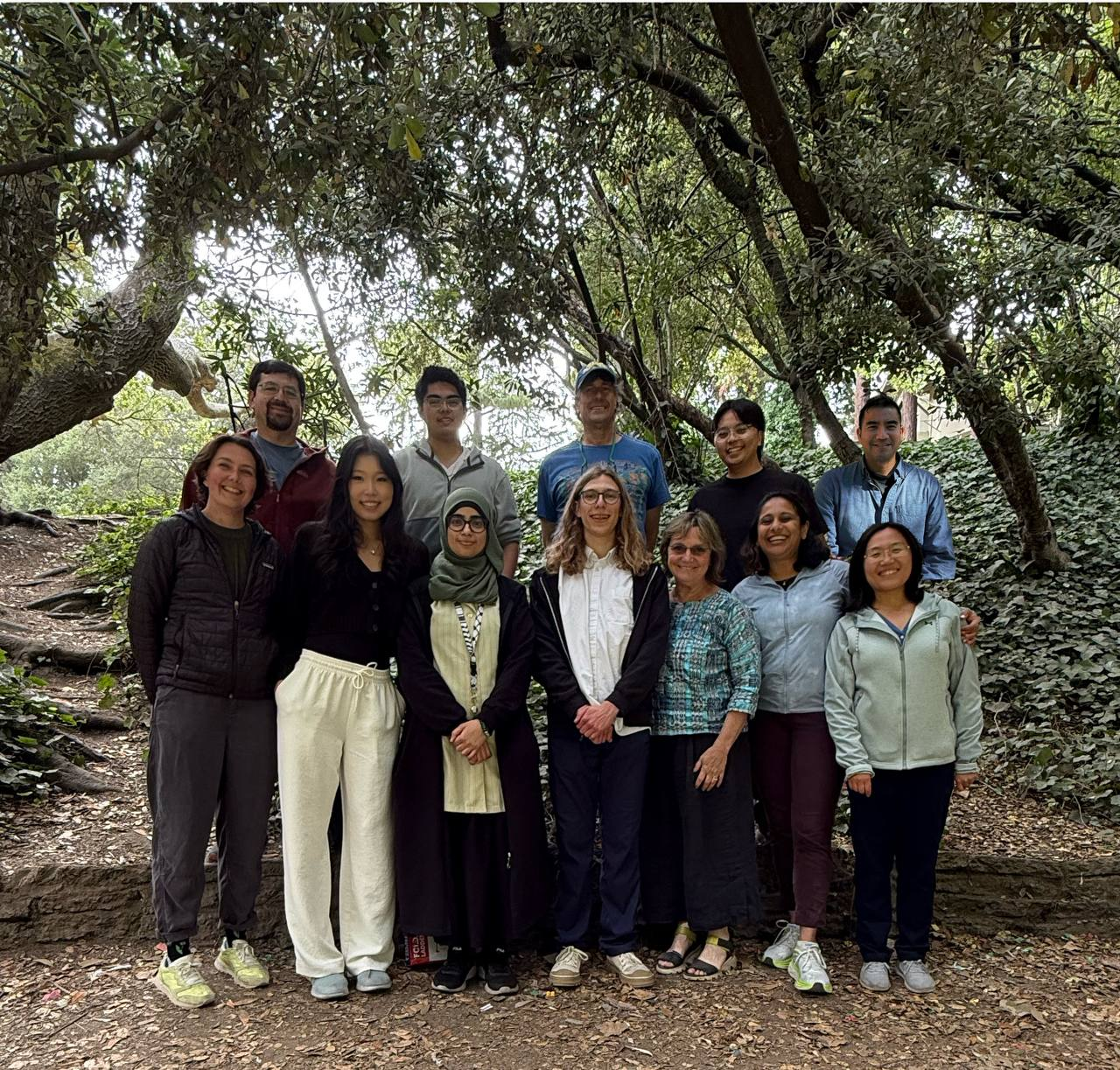
Today, Yerkezhan works in a close-knit team of just five: two graduate students, one postdoc, one volunteer, and herself—the only undergraduate.
“It’s incredible to have a professor who is still working hands-on with students,” she says. “They’re all so supportive, and I’ve learned more from watching how they troubleshoot and question data than from any textbook.”
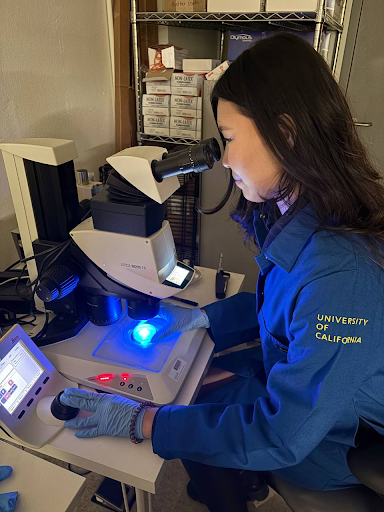
At Minerva, Yerkezhan follows the Cells & Organisms track, having completed core courses in genetics, biochemistry, and geology. She plans to take NS164 and use IL119 to earn research credits for her Berkeley research she’s been doing for two years now. In parallel, she’s pursuing a double major that combines Natural Science with Business, driven by her growing interest in the biotech industry. “After my Ph.D., I don’t see myself in academia,” she admits. “I want to work at biotech startups or private research labs where innovation moves faster and funding supports big ideas.”
Her networking efforts have already brought her into contact with founders from emerging biotech companies in San Francisco and Berkeley—some valued at over $500 million, such as Retro Biosciences. She also keeps an eye on initiatives from the Chan Zuckerberg Biohub, where AI is used to model disease mechanisms. “It’s an exciting time for life sciences, and being in Berkeley really puts you in the middle of it,” she says.
When asked about the Minerva professors who have shaped her scientific approach, Yerkezhan immediately names Professor Wilkins, with whom she has now taken three courses, including NS144: Genetics. “His classes helped me build a rigorous, evidence-based mindset and made me more confident in reading and critiquing research papers.”
Balancing coursework with demanding lab hours isn’t easy, but Yerkezhan has developed a practical system: “I schedule all my classes on one day, so I can dedicate the rest of the week to research. I usually go to the lab on Tuesdays, Thursdays, and Fridays.” When she’s not in the lab, Yerkezhan enjoys hiking around the Bay Area—her favorite outing so far being a trip to Marshall’s Beach for one of her NS111 Location-Based Assignments.
Her favorite project so far investigates how meiosis relates to aging and fertility decline. “We were studying a mutant phenotype that produced inviable eggs and trying to fix the gene responsible,” she explains. “We hypothesized that introducing a key protein could restore fertility—but the results turned out the opposite way.” Though unexpected, the outcome taught her an important scientific lesson.
“Not every hypothesis is right—and that’s okay. Even a failed experiment can teach you something valuable.”
She presented her findings at the Molecular and Cell Biology (MCB) conference at Berkeley, where she was the only undergraduate among postdocs and graduate students. “It was nerve-racking, but also really rewarding,” she laughs. “My postdoc told me, ‘If you can publish a paper in just three months, what’s the point of doing a Ph.D.?’” Looking ahead, Yerkezhan plans to apply to graduate school—UC Berkeley is her top choice—to continue exploring genetics and immunology, ideally with applications in clinical research and drug development. “I want to work on something that has a real human impact,” she says.
Her advice for younger Minerva students hoping to pursue research?
“Be curious about a lot of things. Read papers. Talk to people. Then slowly filter down to what truly excites you. You’ll figure out what you like—and just as importantly, what you don’t.”
As she reflects on her journey from high school curiosity to research at UC Berkeley, Yerkezhan smiles. “It all started with asking questions—and it turns out, that’s still the most important part.”
Quick Facts
Computational Sciences
Computational Sciences
Natural Sciences
Computational Sciences
Arts & Humanities, Natural Sciences
Social Sciences & Arts and Humanities
Business
Computational Sciences
Computational Sciences
Social Sciences & Business
Computational Sciences
Social Sciences
Computational Sciences & Business
Business & Computational Sciences
Computational Sciences
Computational Sciences
Social Sciences & Business
Business
Natural Sciences
Social Sciences
Social Sciences
Social Sciences & Business
Business & Computational Sciences
Business and Social Sciences
Social Sciences and Business
Computational Sciences & Social Sciences
Computer Science & Arts and Humanities
Business and Computational Sciences
Business and Social Sciences
Natural Sciences
Arts and Humanities
Business, Social Sciences
Business & Arts and Humanities
Computational Sciences
Natural Sciences, Computer Science
Computational Sciences
Arts & Humanities
Computational Sciences, Social Sciences
Computational Sciences
Computational Sciences
Natural Sciences, Social Sciences
Social Sciences, Natural Sciences
Data Science, Statistics
Computational Sciences
Business
Computational Sciences, Data Science
Social Sciences
Natural Sciences
Business, Natural Sciences
Business, Social Sciences
Computational Sciences
Arts & Humanities, Social Sciences
Social Sciences
Computational Sciences, Natural Sciences
Natural Sciences
Computational Sciences, Social Sciences
Business, Social Sciences
Computational Sciences
Natural Sciences, Social Sciences
Social Sciences
Arts & Humanities, Social Sciences
Arts & Humanities, Social Science
Social Sciences, Business
Arts & Humanities
Computational Sciences, Social Science
Natural Sciences, Computer Science
Computational Science, Statistic Natural Sciences
Business & Social Sciences
Sustainability
Sustainability
Natural Sciences & Sustainability
Natural Sciences
Sustainability
Computational Sciences
Computational Sciences
Computational Science & Business
Data Science and Statistics
Data Science and Statistics, Digital Practices
Earth and Environmental Systems
Cognition, Brain, and Behavior & Philosophy, Ethics, and the Law
Computational Theory and Analysis
Computer Science and Artificial Intelligence
Brand Management & Computer Science and Artificial Intelligence
Computer Science and Artificial Intelligence
Economics and Society & Strategic Finance
Enterprise Management
Economics and Society
Cells and Organisms & Brain, Cognition, and Behavior
Cognitive Science and Economics & Political Science
Applied Problem Solving & Computer Science and Artificial Intelligence
Computer Science and Artificial Intelligence & Cognition, Brain, and Behavior
Designing Societies & New Ventures
Strategic Finance & Data Science and Statistics
Brand Management and Designing Societies
Data Science & Economics
Machine Learning
Cells, Organisms, Data Science, Statistics
Arts & Literature and Historical Forces
Artificial Intelligence & Computer Science
Cells and Organisms, Mind and Emotion
Economics, Physics
Managing Operational Complexity and Strategic Finance
Global Development Studies and Brain, Cognition, and Behavior
Scalable Growth, Designing Societies
Business
Drug Discovery Research, Designing and Implementing Policies
Historical Forces, Cognition, Brain, and Behavior
Artificial Intelligence, Psychology
Designing Solutions, Data Science and Statistics
Data Science and Statistic, Theoretical Foundations of Natural Science
Strategic Finance, Politics, Government, and Society
Conversation
At just twenty, Yerkezhan Toleukhan is already making her mark in molecular biology. A Natural Science and Business student at Minerva, she currently conducts research at the prestigious Dernburg Lab at UC Berkeley—one of the leading centers for genetics and meiosis studies in the world.
Yerkezhan’s passion for biology began long before university. Growing up in Kazakhstan, she attended a specialized high school where her A-Level biology teacher sparked her curiosity about genetics. “I think that’s when I realized how much I enjoyed learning about life on the molecular level,” she recalls. Around that time, she also discovered the work of a UC Berkeley professor whose pioneering research on CRISPR technology had just earned a Nobel Prize. “I started following her talks and reading everything I could about gene editing,” Yerkezhan says. “It made me want to be part of that world.”
From 50 Cold Emails to a Lab at Berkeley
Determined to gain real research experience, Yerkezhan began cold-emailing professors——whose work aligned with her interests in genetics and molecular biology. Three replied, and one of them was who studies chromosome dynamics and meiosis using, a small worm commonly used in genetic research.
Inside the Dernburg Lab
Today, Yerkezhan works in a close-knit team of just five: two graduate students, one postdoc, one volunteer, and herself—the only undergraduate.
“It’s incredible to have a professor who is still working hands-on with students,” she says. “They’re all so supportive, and I’ve learned more from watching how they troubleshoot and question data than from any textbook.”
At Minerva, Yerkezhan follows the Cells & Organisms track, having completed core courses in genetics, biochemistry, and geology. She plans to take NS164 and use IL119 to earn research credits for her Berkeley research she’s been doing for two years now. In parallel, she’s pursuing a double major that combines Natural Science with Business, driven by her growing interest in the biotech industry. “After my Ph.D., I don’t see myself in academia,” she admits. “I want to work at biotech startups or private research labs where innovation moves faster and funding supports big ideas.”
Her networking efforts have already brought her into contact with founders from emerging biotech companies in San Francisco and Berkeley—some valued at over $500 million, such as Retro Biosciences. She also keeps an eye on initiatives from the Chan Zuckerberg Biohub, where AI is used to model disease mechanisms. “It’s an exciting time for life sciences, and being in Berkeley really puts you in the middle of it,” she says.
When asked about the Minerva professors who have shaped her scientific approach, Yerkezhan immediately names Professor Wilkins, with whom she has now taken three courses, including NS144: Genetics. “His classes helped me build a rigorous, evidence-based mindset and made me more confident in reading and critiquing research papers.”
Balancing coursework with demanding lab hours isn’t easy, but Yerkezhan has developed a practical system: “I schedule all my classes on one day, so I can dedicate the rest of the week to research. I usually go to the lab on Tuesdays, Thursdays, and Fridays.” When she’s not in the lab, Yerkezhan enjoys hiking around the Bay Area—her favorite outing so far being a trip to Marshall’s Beach for one of her NS111 Location-Based Assignments.
Her favorite project so far investigates how meiosis relates to aging and fertility decline. “We were studying a mutant phenotype that produced inviable eggs and trying to fix the gene responsible,” she explains. “We hypothesized that introducing a key protein could restore fertility—but the results turned out the opposite way.” Though unexpected, the outcome taught her an important scientific lesson.
“Not every hypothesis is right—and that’s okay. Even a failed experiment can teach you something valuable.”
She presented her findings at the Molecular and Cell Biology (MCB) conference at Berkeley, where she was the only undergraduate among postdocs and graduate students. “It was nerve-racking, but also really rewarding,” she laughs. “My postdoc told me, ‘If you can publish a paper in just three months, what’s the point of doing a Ph.D.?’” Looking ahead, Yerkezhan plans to apply to graduate school—UC Berkeley is her top choice—to continue exploring genetics and immunology, ideally with applications in clinical research and drug development. “I want to work on something that has a real human impact,” she says.
Her advice for younger Minerva students hoping to pursue research?
“Be curious about a lot of things. Read papers. Talk to people. Then slowly filter down to what truly excites you. You’ll figure out what you like—and just as importantly, what you don’t.”
As she reflects on her journey from high school curiosity to research at UC Berkeley, Yerkezhan smiles. “It all started with asking questions—and it turns out, that’s still the most important part.”