





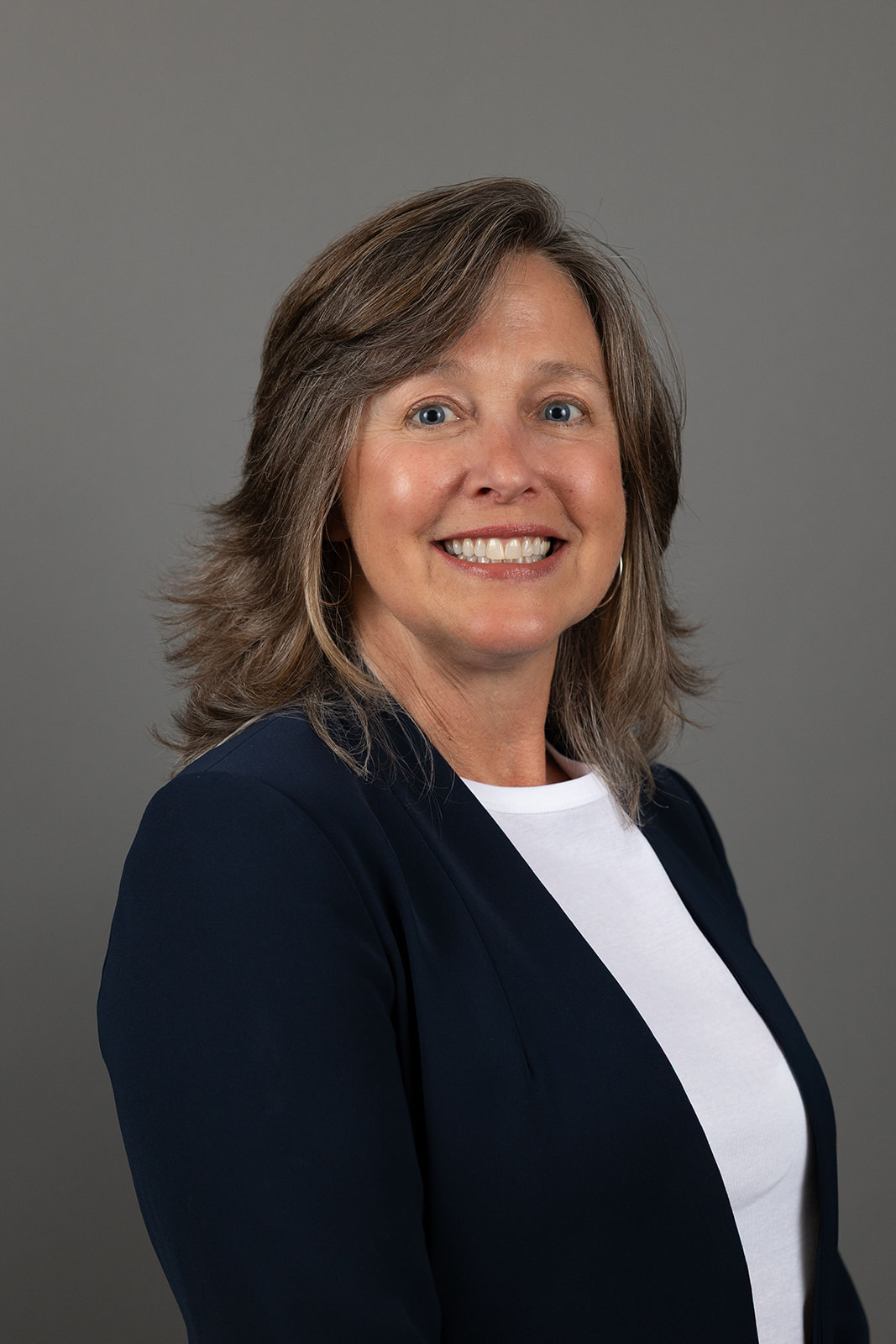
Patrice McMahon, Ph.D.
Provost
Accomplishments

Patrice McMahon is a political scientist and academic leader with more than 25 years of service as a Professor of Political Science and administrator at the University of Nebraska–Lincoln. Over the course of her career at UNL, she played a central role in shaping undergraduate education, most notably as Director of the University Honors Program, a position she held for six years. In addition to leading Honors, she served as Director of Global Engagement, Director of Global Studies, Graduate Chair of Political Science, and, the College of Arts and Sciences Dean’s Professor of Teaching and Learning (2018-2021).
In 2024/25 McMahon was a Council on Foreign Relations International Affairs Fellow and worked at the Community of Democracies in Warsaw, Poland. In 2025, she was chosen as a Bellagio Residency Fellow by the Rockefeller Foundation for her work on humanitarianism’s future.
McMahon earned her PhD from Columbia University, her MA from The George Washington University, and her BA from The American University, all in Washington, DC. A two-time Fulbright Research Fellow, she has received numerous awards for teaching excellence at UNL, including the Dean’s Award for Excellence in Graduate Education (2012), Outstanding Educator of the Year (2009–10), the “Best Class at UNL” award (2007), and the College of Arts and Sciences Distinguished Teaching Award (2005).
Her scholarship explores the complexities and contradictions of humanitarianism, civil society activism, democratization, and transnational politics. Her publications include The NGO Game: Post-Conflict Peacebuilding in the Balkans and Beyond (Cornell University Press); Activism in Hard Times in Central and Eastern Europe: People Power, co-edited with activists and scholars; seven additional book projects; and numerous articles and policy reports. Her work has appeared in outlets such as Foreign Affairs, Political Science Quarterly, Human Rights Quarterly, Democratization, and Ethnopolitics, and has been supported by the National Endowment for Humanities, the American Council for Learned Societies, the U.S. Department of State, the National Research Council, the National Council for East European and Eurasian Research, the Soros Foundation, the Carnegie Corporation of New York, and the Polish Science Foundation.